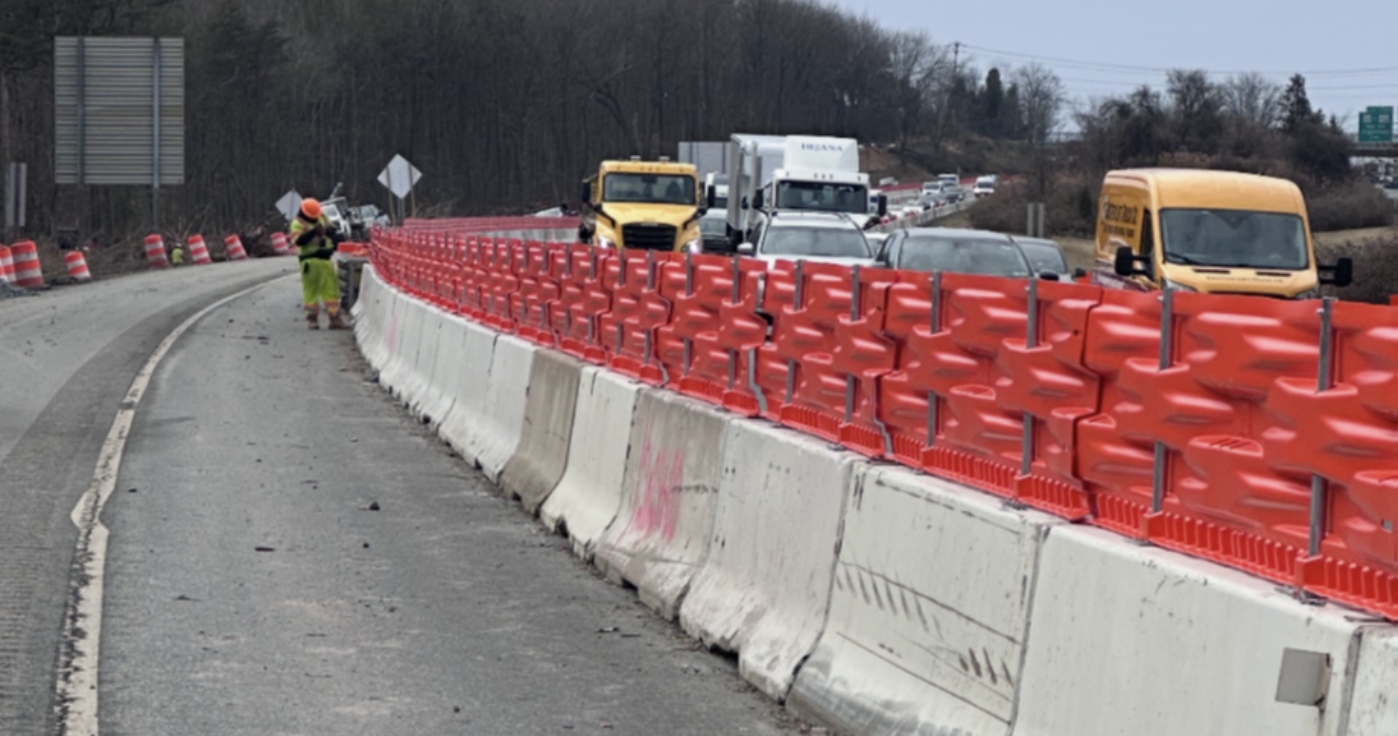
Active highway work zones are some of the most dangerous places to work in America. Crews spend their shifts a few feet from vehicles traveling at highway speed, often at night, often for weeks at a time on the same stretch of road. The margin for error is thin, and the consequences of a single distracted or speeding driver can be permanent.
The good news is that most work zone tragedies trace back to a handful of predictable, well-documented risks. Once you understand what those risks are, you can select the right protective hardware to absorb them. This guide walks through the most common dangers in active work zones and shows exactly where glare screens, temporary traffic screens, and pedestrian barriers make the difference for both workers and the driving public.
The Most Common Safety Risks in Active Highway Work Zones
The scale of the problem is significant. According to the National Safety Council’s Injury Facts, 850 people were killed and more than 42,000 injured in work zone crashes in 2024. Longer-term federal FARS data covering 2008 through 2022 recorded nearly 100,000 fatal crashes, almost 2 million injury-only crashes, and over 5.1 million property-damage-only crashes in work zones. From 1982 to 2020, close to 29,500 people were fatally injured in work zone incidents nationwide, an average of roughly 776 deaths per year.
Road construction workers account for an estimated 1.5% to 3% of all U.S. workplace fatalities each year. The main drivers behind those numbers come up again and again:
- Vehicle intrusion into the workspace. This is the single largest cause of worker deaths. Among transport-related work zone accidents from 2011 to 2020, 63% involved workers being struck by vehicles, either intruding from outside the zone or operating within it, resulting in 577 deaths. The trend has grown worse over time. In 2015, 35% of highway worker fatalities at construction sites came from a vehicle striking a worker. By 2021, that figure reached 63%.
- Speeding, distracted, and impaired driving. Speeding is the most common contributing factor in fatal work zone crashes statewide in Colorado, and contractors nationally point to phone use, speeding, reckless driving, and impaired driving as leading causes of crashes in active work zones.
- Driver confusion. Inadequate traffic control is the most common safety violation in construction work zones. Missing or poorly placed signage, cones, or barriers raise the risk of collisions with workers and equipment.
- Risk to motorists themselves. In Texas in 2025 alone there were more than 28,000 work zone crashes resulting in 203 deaths, including only seven roadside workers. Nationally, four out of five work zone fatalities are drivers or passengers.
- How often crashes happen. In a 2025 industry survey, 60% of 675 responding construction firms reported that a motor vehicle had crashed into their active work zone in the past year.
- Headlight glare and nighttime visibility. More night work gets scheduled to avoid peak-hour congestion. Heavier traffic combined with night operations raises the danger for workers positioned close to fast-moving vehicles.
Which Risks Barriers and Traffic Screens Actually Reduce
Positive-protection barriers exist to solve the vehicle-intrusion problem directly. Temporary traffic barriers are engineered to help prevent penetration by vehicles while minimizing injuries to vehicle occupants, and to protect workers, bicyclists, and pedestrians.
Here is where each device earns its place:
- Vehicle intrusion and no-escape zones. Temporary barriers are recommended for work areas with no escape route, including internal lane work, tunnels, bridges, and areas next to retaining walls, along with any situation where workers stay within a lane’s width of high-speed, high-volume traffic.
- Pedestrian and worker exposure. Positive protection should be considered wherever there is a high potential for vehicle intrusion into pedestrian space.
- Head-on and cross-median crashes. Positive separation should be used when multilane divided facilities get temporarily shifted to two-lane, two-way traffic for more than three days.
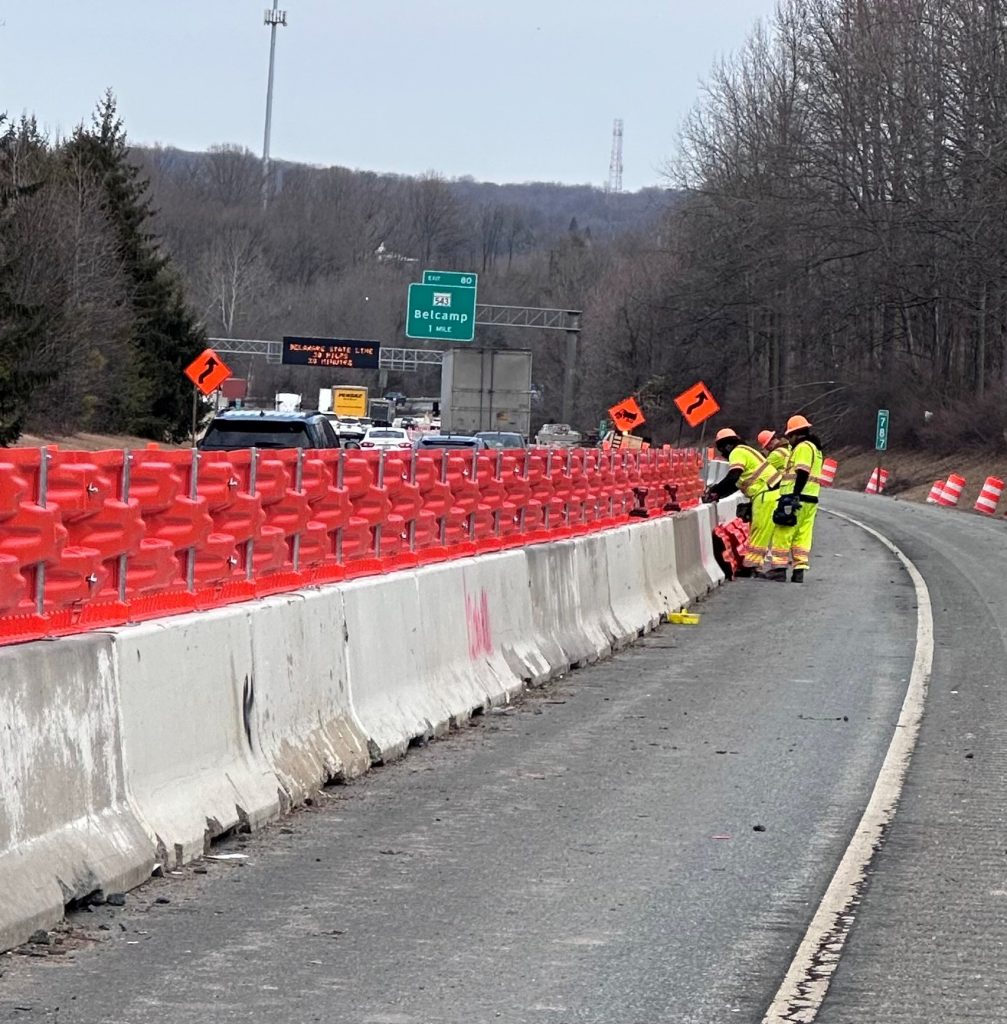
- Driver distraction and gawking. Glare screens cut headlight glare from opposing traffic and reduce gawking in work zones, both of which contribute to crashes.
- Drop-offs and unstable slopes. Slopes steeper than 3H:1V can cause vehicle overturns and should be protected by some type of barrier.
- Unauthorized pedestrian crossings. Pedestrian barriers separate foot traffic from vehicle lanes and construction activity in detours and high-traffic areas.
Common Mistakes When Selecting or Installing Barriers and Screens
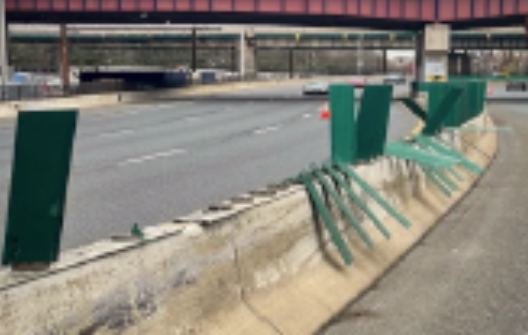
Even good hardware fails when it is installed incorrectly. These errors show up repeatedly on projects and each one reintroduces the exact risk the barrier was meant to remove.
- Leaving gaps or short, disconnected segments. MUTCD guidance is clear that short intermittent segments of temporary traffic barriers should not be used. They cancel out the barrier’s containment and redirective ability, raise injury risk for vehicle occupants and pedestrians, and create blunt leading ends. Adjacent segments must be properly connected to deliver the strength the system needs.
- Mixing devices inconsistently. Partial barriers, gaps, and mixed devices can accidentally invite entry into restricted areas. Uniform appearance and placement lower cognitive load and help road users respond correctly.
- Treating a barricade like a barrier. These are two different tools for two different jobs. Using the wrong one for the risk level is a common and dangerous mistake.
- Leaving barrier ends unprotected. Exposed ends need proper flaring or crash cushions. An impact attenuator vehicle should handle placement and removal of temporary traffic control devices when the contract requires it, and barrier vehicles belong between approaching motorists and workers on foot.
- Poor lateral offset choices. Offsets of 4 to 10 feet from traffic should generally be avoided because of the false shoulder effect, and approach ends should flare beyond the clear zone where possible.
- Skipping the engineering and cost-benefit step. Positive-protection decisions should weigh crash history, project cost and duration, available lane width, and roadway classification. Rushing past this analysis under time pressure is a frequent root cause of inadequate protection.
- Weak traffic control planning overall. Many barrier failures actually trace back to a poor traffic control plan around the barrier rather than the barrier itself.
The barrier-versus-barricade confusion causes enough trouble to spell out plainly:
| Feature | Barrier | Barricade |
| Primary job | Redirects, slows, or stops an errant vehicle | Warns and channelizes motorists |
| Structural resistance | High; built to contain impact | Little to none when struck |
| Category | Positive protection | Lightweight channelizing device |
| Correct use | High-risk zones with intrusion potential | Guidance and warning only |
Highway Projects Where Screens and Barriers Matter Most
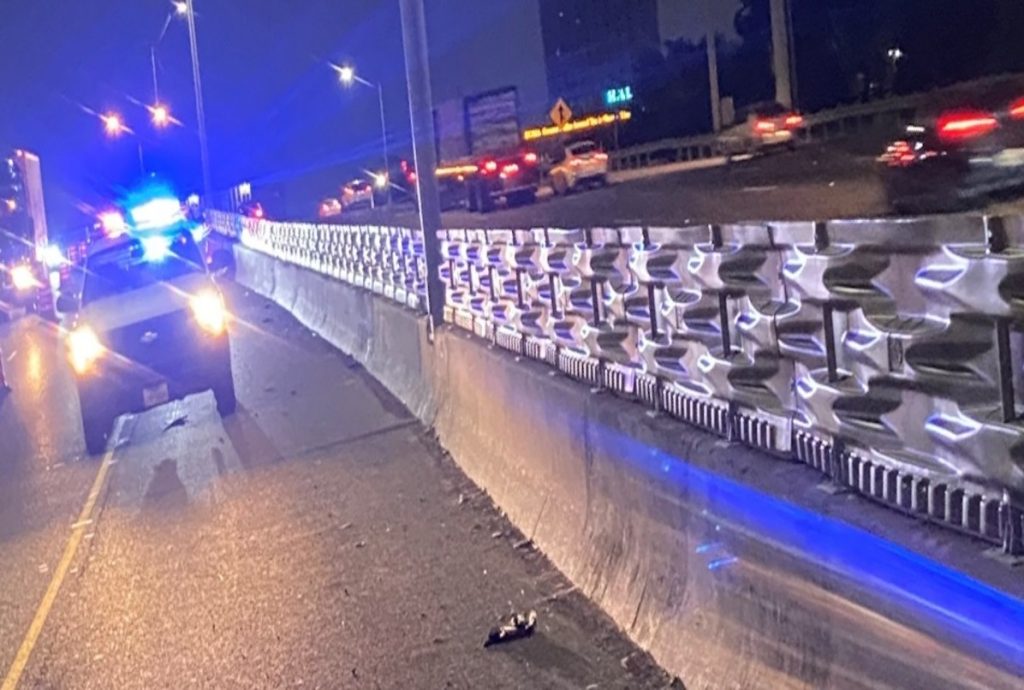
Certain project types appear over and over in DOT guidance as the highest-priority candidates for positive protection:
- Bridge work. Bridge traffic control introduces vertical clearance limits, narrow shoulders, and the need to keep traffic moving on or below the structure. These jobs often require temporary barrier walls, reduced speed zones, and coordination with waterway or railroad authorities. A temporary concrete barrier is used predominantly on bridge decks, and teams must confirm with structural design whether the deck can support the barrier’s weight or needs anchoring.
- Lane closures and two-way conversions. When multilane divided facilities shift to two-lane, two-way operation for more than three days, positive separation is recommended.
- Work with no escape route. Internal lane work, tunnel work zones, and areas next to retaining walls are flagged as priority cases for temporary barriers.
- Utility work in the right-of-way. Water, sewer, gas, electric, and telecommunications work frequently happens in the public right-of-way and often requires approved traffic control setups as a permit condition, usually with shorter durations and repeated mobilizations across many sites.
- Drop-offs and grade changes. Milling, partial-width paving, and excavation next to traffic create steep slopes that need barrier protection against vehicle overturn.
- Nighttime and double-shift operations. Glare and visibility issues intensify after dark, so temporary glare screens play a critical role during night paving, bridge construction, and major detours.
What to Look For in Glare Screens and Temporary Traffic Screens
Screen selection deserves the same care as barrier selection. Use this checklist to separate durable, standards-compliant products from ones that fail early and quietly.
| Feature | Why It Matters |
| Non-louvered, durable material | Louvered designs tend to crack or snap off under repeated impact or weather exposure |
| Modularity and easy integration | Panels can be added, removed, or relocated without pulling barrier walls, cutting worker exposure time |
| Weather and corrosion resistance | Hot-dipped galvanized construction with powder-coating survives salt and snow in harsh climates |
| Compatibility with existing barriers | A good screen integrates with both concrete and steel barriers already on site |
| Individual panel replacement | Swapping one damaged blade avoids dismantling the whole array, lowering cost and exposure |
| Correct minimum height | California’s draft 2026 MUTCD specifies a 24-inch minimum for temporary traffic screen panels, with design following AASHTO’s Roadside Design Guide, Chapter 9 |
| Retroreflective elements | Reflective sheeting lets a screen double as a delineator for glare-blocking and channelization in one product |
| Rebound capability | Systems that flex and spring back after impact survive strikes from overhanging loads or errant vehicles without replacement |
| Sightline-friendly placement | Screen runs near entrance and exit ramps need review after installation, since a screen that blocks motorist visibility will be flagged for removal |
How Proper Installation Protects Workers and Motorists
Properly installed glare screens, pedestrian barriers, and temporary traffic screens protect the two groups most at risk in a work zone in complementary ways.
For motorists:
- Glare screens cut headlight glare from oncoming traffic on medians and divided highways, keeping drivers’ eyes adjusted to the road and lowering the risk of momentary blindness, overcorrection, or nighttime drifting.
- They limit cross-median visibility and discourage gawking at construction activity, which keeps driver attention on the travel lane.
- Pedestrian barriers keep foot traffic out of travel lanes and off shoulders, removing the hazard of someone stepping into a driver’s path in an unfamiliar detour.
- Temporary traffic screens improve channelization and visibility, helping drivers read the road ahead and reducing the confusion that leads to sudden braking and last-second lane changes.
For workers:
- All three devices create physical separation that takes worker safety out of the hands of driver attentiveness. They reduce the chance that a distracted or impaired driver ever gets close enough to matter.
- Glare screens protect workers during nighttime and double-shift operations, where glare-related distraction runs higher and exposure time runs longer.
- Gapless, properly connected installation is essential. A screen or barrier with gaps or short disconnected segments creates a false sense of protection while leaving real openings for vehicle intrusion.
- Pedestrian barriers draw a hard, visible boundary that keeps workers on foot from wandering and gives drivers an unambiguous edge to stay clear of.
The common thread ties it all together. None of these devices make a crash impossible. What they do is reduce the consequences of human error on both sides. A driver briefly blinded by glare, a worker distracted by a repetitive task, a pedestrian routed through an unfamiliar detour: these everyday lapses are exactly what barriers and screens are designed to absorb. Correct installation matters as much as the product, since a screen blocking a sightline near a ramp or a barrier with an unflared end can introduce a fresh hazard even while solving another.
Standards, Regulations, and Best Practices You Should Know
Work zone protection sits inside a well-defined framework of federal and state rules. Keep these front and center on any project:
- MUTCD Part 6 (Temporary Traffic Control). The core federal standard for TTC plans, work zone devices, pedestrian and worker safety, flagger control, and zone design. Section 6M.02 specifically addresses positive protection and temporary traffic barriers. A TTC plan is required for all work zones on roadways open to public travel, scaled to the work’s complexity.
- FHWA crashworthiness policy. All roadside appurtenances on the National Highway System, including traffic barriers, terminals, crash cushions, and work zone hardware, must meet crashworthy performance criteria.
- MASH (Manual for Assessing Safety Hardware). MASH has effectively superseded NCHRP Report 350 testing for current devices under the TL-2 and TL-3 framework.
- ATSSA Quality Guidelines. Device conditions should comply with the current ATSSA Quality Guidelines for Temporary Traffic Control Devices and Features.
- ADA and 28 CFR 35-36. Accessible temporary pedestrian facilities must meet standards drawn from NCHRP guidance and the 2010 ADA Standards for Accessible Design.
- State DOT supplements. Most states adopt the MUTCD with local amendments, such as Caltrans Standard Plans and NCDOT’s Work Zone Traffic Control design manual. California’s draft 2026 MUTCD specifies a 24-inch minimum screen panel height and references Chapter 9 of AASHTO’s Roadside Design Guide.
- Caltrans Positive Protection Program. Launched in 2021, this state-level model directs Caltrans engineers and contractors to use positive protection for worker safety, building on research that found a cost-benefit of roughly $1.9 million in 2008 dollars, about $2.87 million in 2025 dollars, per highly mobile barrier system per year.
A Real-World Example: Repurposing a Glare Screen on I-30 in Dallas
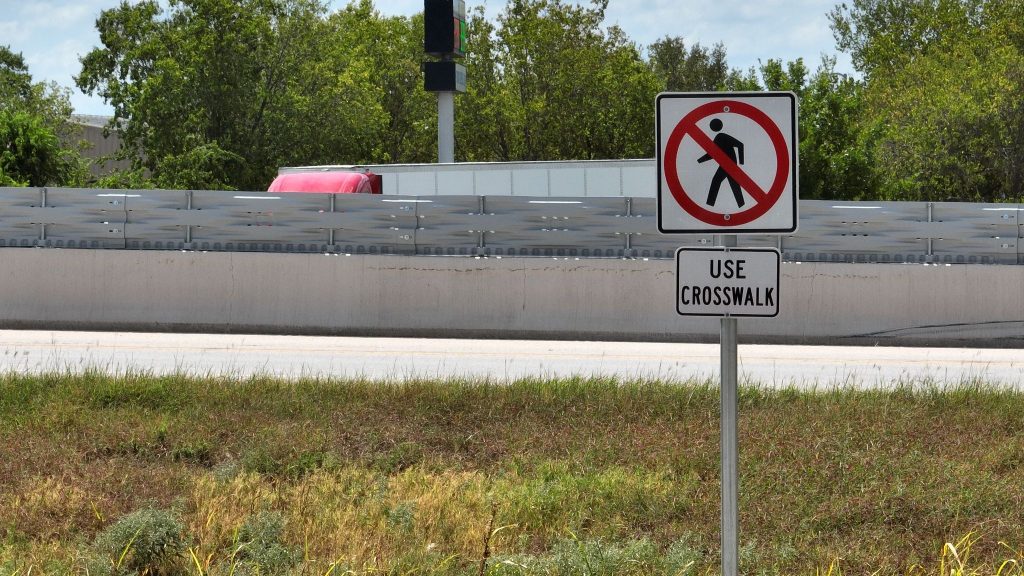
One of the clearest documented cases comes from TxDOT’s Dallas District on Interstate 30.
Over roughly three years, seven pedestrians died attempting to cross I-30 to reach a shopping center, even though a pedestrian bridge sat within a quarter mile on either side of where the deaths kept happening. TxDOT had funded a permanent pedestrian bridge as the long-term fix and needed something to stop the deaths immediately while that project got underway.
A TxDOT engineer first considered a chain-link fence and ruled it out, since fencing becomes a maintenance headache and catches roadway debris over time. He recalled seeing a glare screen product at an industry safety expo. The product, originally designed to block headlight glare between opposing traffic and cut down on rubbernecking in work zones, got repurposed for a job it had never been asked to do. TxDOT became the first known agency to deploy a glare screen specifically as a pedestrian-crossing deterrent, making it physically difficult for anyone to scale or see through the barrier to time a crossing.
The case shows the flexibility of the product category. Hardware engineered to solve a driver-glare and distraction problem in work zones was adapted on the fly to stop illegal pedestrian incursions onto a freeway, serving as a fast, low-maintenance stopgap while a far more expensive permanent fix was still years away.
Clearing Up Common Misconceptions
A few myths follow these products around. Setting them straight helps buyers make better decisions.
- “Glare screens are a comfort feature.” Headlight glare is a genuine driver distraction, especially at night, capable of causing real visual impairment for a few critical seconds. Glare screens function as crash-prevention infrastructure. Treating them as optional on a project budget ignores a documented nighttime crash factor.
- “Any screen panel blocks glare effectively.” Louvered glare screens crack under repeated impact or weather stress, which compromises both the glare-blocking function and the screen’s physical integrity. A screen that looks intact from a distance can have failed components.
- “More coverage is always better.” Screen placement near entrance and exit ramps needs review after installation. A screen that blocks visibility at a merge or exit point creates a new hazard and has to come out. Continuous coverage suits a straight median run, and blanket coverage at interchanges can backfire.
- “Screens are interchangeable with barriers.” A screen mounted on a barrier handles visibility, glare, and gawking. It serves a different purpose from the barrier’s structural, crash-redirecting job.
- “Once installed, screens need no follow-up.” Because screens sit on top of barriers already in place, they get treated as set-and-forget. Damaged or dislodged panels still need to be caught and replaced, since a section that has lost panels creates an inconsistent visual cue that raises driver confusion.
- “They only help at night.” Headlight glare peaks after dark, and the gawking-reduction and channelization functions run all day. Drivers slow down and rubberneck at active construction at any hour, and screens that limit cross-median visibility help with the daytime slowdown too.
Practical Advice for Planning Your Next Project
Use this sequence when you reach the screen and barrier selection stage:
- Pinpoint where glare and visibility are the real problem. Screens belong on median barriers for divided highways, night paving, bridge construction, and major detours where oncoming headlights or gawking drive the risk. Target them rather than screening every barrier run.
- Match height and design to the governing standard. Confirm minimum height with your state DOT. California’s draft 2026 MUTCD sets a 24-inch minimum for temporary traffic screen panels, with design referencing AASHTO’s Roadside Design Guide.
- Choose rebound-capable, non-louvered materials. Prioritize systems that flex back into position after impact. A broken screen stops working invisibly, often unnoticed until a review catches it.
- Plan for modular installation and single-panel replacement. Swapping one damaged panel instead of a whole run keeps cost and worker exposure down across the project’s life.
- Map ramp and interchange locations before finalizing runs. Planning gaps or adjusted runs at interchanges upfront is far more efficient than installing continuous coverage and having it flagged for removal.
- Select barrier and screen as paired decisions. Choose the structural barrier first based on containment needs, then layer the screen on top for glare and visibility at that same location.
- Confirm compatibility with your barrier type. Steel and concrete barriers do not always use the same mounting systems, so verify integration before install rather than retrofitting later.
- Schedule a follow-up inspection. Screens sit on barriers that may shift, get struck, or get relocated as phasing changes. A screen placed correctly in phase one can become a sightline problem in phase two if no one rechecks it.
- Pick a supplier who can adjust for site conditions. With runs, phasing, and ramp locations shifting mid-project, a manufacturer with in-house production and engineering can modify panel length or mounting for your exact site.
What Sets Beltway USA Apart
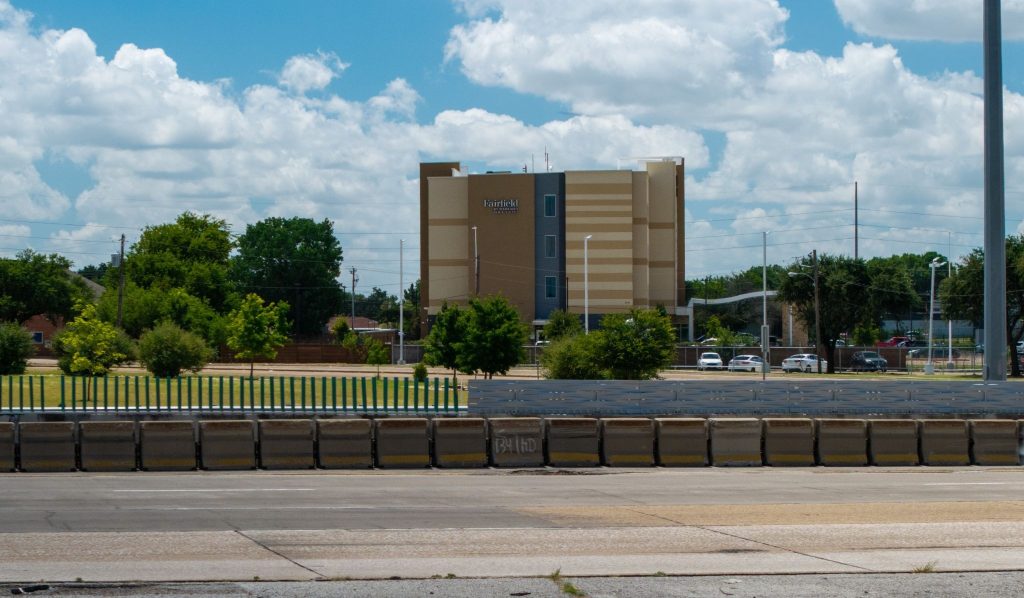
When the risks are this well understood, the quality and adaptability of your hardware become the deciding factor. Beltway USA is built to meet that standard from the raw material up.
- Full vertical integration. Beltway USA controls every stage of manufacturing in-house, from sourcing premium-grade raw materials through extrusion, forming, fabrication, testing, and packaging. Owning the entire production chain allows faster lead times, tighter quality control, and customization for project-specific conditions without relying on third-party suppliers at any stage.
- In-house engineering. Capabilities include structural design for high-wind stability, material testing for impact resistance and UV protection, integration with existing traffic management systems, and custom fabrication for project-specific requirements.
- A coordinated product line. The catalog spans flow panels, gawk screens, glare screens, debris barriers, and pedestrian barriers, designed to work as one system rather than standalone parts from different vendors.
- Glare screen durability advantage. Beltway USA glare screens are engineered to avoid the broken-louver problem common to louver-style screens, with seamless integration into concrete and steel barriers.
- Pedestrian barrier integration. These barriers integrate with concrete barriers (CTBs) and steel barriers already on site rather than requiring a separate standalone system.
- American-made, made to order. All Beltway USA road construction and traffic control equipment is manufactured in America, with in-house production enabling faster lead times without sacrificing quality control.
- The Flow Panel® flagship system. The Flow Panel® attaches directly to existing road barriers to control visibility and guide traffic, purpose-built to integrate with barrier systems already in place.
If your next project involves night work, divided-highway medians, bridge decks, or pedestrian detours, Beltway USA can help you match the right screens and barriers to your specific site conditions. Reach out to talk through your traffic control needs with a team that builds every product from the ground up.